Back to Blog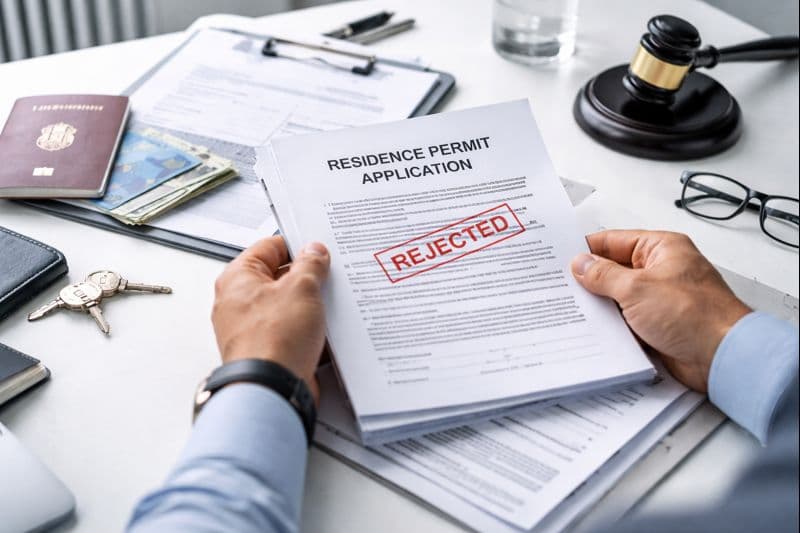
·5 min read
Common Reasons Residence Permit Applications Get Rejected in Lithuania (2025 Guide)
Applying for a Lithuanian residence permit can seem straightforward—until a refusal arrives. In practice, common reasons residence permit applications get rejected in Lithuania are often avoidable: missing documents, weak proof of purpose, inconsistent information, or failure to meet core legal requirements such as health insurance and sufficient financial means.
This 2025 guide explains the legal background, the step-by-step process, and the most frequent rejection triggers seen in Vilnius, Kaunas, Klaipėda, and across Lithuania. The aim is to help you submit a complete, credible application that aligns with Lithuanian law and current practice.
Legal Background in Lithuania
Temporary residence permits (TRP) and permanent residence are regulated by the Law on the Legal Status of Aliens and administered by the Lithuanian Migration Department. Authorities may reject an application if legal conditions are not met or if the applicant fails to convincingly demonstrate the purpose and legality of stay.
In simple terms, an application may be refused if the authorities determine that the applicant:
- poses a risk to public order or national security,
- provided false or misleading information,
- does not have sufficient financial means,
- lacks valid health insurance, or
- does not meet the conditions of the chosen legal basis (work, business, family, studies).
Lithuania applies a strict evidence-based approach. Applicants must prove their situation with documents, not just declarations.
Step-by-Step Legal Process
Understanding where problems usually occur helps avoid refusal.
-
Select the correct legal basis
- Employment
- Business or investment
- Family reunification
- Studies
- Other lawful grounds
-
Prepare all required documents
- Core documents applicable to all applicants
- Additional documents specific to the legal basis
-
Submit the application
- Usually through the Migration Department or official systems
-
Attend appointments and provide biometrics
- Missing appointments or original documents may lead to rejection
-
Application review and verification
- Authorities verify documents, consistency, and credibility
-
Respond to requests for additional information
- Late or incomplete responses increase refusal risk
-
Decision
- Approval or refusal with legal reasoning and appeal options
Key Legal Requirements & Documents
Certain requirements are essential in almost every case.
Core requirements
- Valid passport or travel document
- Clear legal basis for stay
- Proof of sufficient financial means
- Valid health insurance
- Confirmed accommodation in Lithuania
- Accurate and consistent application data
Common supporting documents
- Bank statements or income proof
- Health insurance policy covering the residence period
- Lease agreement or hosting declaration
- Employment contracts or employer confirmations
- Business activity documents and financial records
- Family relationship certificates
- University admission or enrollment confirmation
Document quality standards
- Consistency across all documents
- Official translations where required
- Proper legalization or apostille if applicable
- Authentic, verifiable documentation
Common Legal Mistakes to Avoid
Below are the most frequent reasons residence permit applications get rejected in Lithuania.
1. Incomplete documentation
Missing or unclear documents remain the leading cause of refusal.
- No valid insurance
- Insufficient proof of funds
- Missing accommodation evidence
- Incomplete basis-specific documents
Tip: Use a detailed checklist and verify everything before submission.
2. Weak proof of purpose
Authorities assess whether your reason for staying is genuine.
- Vague job roles
- Business plans without real activity
- Study plans inconsistent with background
- Insufficient evidence of family relationships
Tip: Support intentions with contracts, records, and factual evidence.
3. Inconsistent or contradictory information
Even small discrepancies can undermine credibility.
- Different name spellings
- Conflicting addresses
- Mismatched dates or job details
Tip: Standardize your personal details across all documents.
4. Misrepresentation or false documents
Any suspicion of falsification almost guarantees refusal.
- Edited bank statements
- Non-genuine employment or accommodation
- Artificial financial arrangements
Tip: Never submit altered or misleading documents.
5. Insufficient financial means
Applicants must show stable and lawful financial support.
- Sudden account balance increases
- Funds held by third parties without explanation
- Unverifiable income sources
Tip: Provide transparent, consistent financial evidence.
6. Health insurance issues
Incorrect or insufficient insurance is a common refusal ground.
- Insurance valid for too short a period
- Excluded coverage
- Wrong insurance category
Tip: Ensure insurance meets residence permit standards.
7. Accommodation problems
Authorities expect a real, credible place of residence.
- Invalid lease agreements
- Unconfirmed hosting arrangements
- Address inconsistencies
Tip: Use legally valid and verifiable accommodation documents.
8. Previous immigration or legal violations
Past issues may negatively affect your application.
- Schengen overstays
- Entry bans
- Deportation decisions
Tip: Address previous issues transparently and with legal explanation.
9. Procedural non-compliance
Failure to complete mandatory questionnaires or steps can lead to rejection.
Tip: Follow all procedural instructions precisely.
10. Poor response to additional document requests
Delayed or incomplete replies often result in refusal.
Tip: Respond clearly, completely, and on time.
Frequently Asked Questions (FAQ)
What is the most common reason for rejection?
Incomplete or inconsistent documentation.
Can I reapply after a refusal?
Yes, in most cases, once refusal reasons are resolved.
Does the city matter?
No. Legal requirements are the same in Vilnius, Kaunas, and Klaipėda.
Can insufficient funds lead to rejection even with a job offer?
Yes. Financial stability must still be proven.
Is it better to withdraw a weak application?
In some cases, correcting issues early may reduce long-term risk.
Conclusion
In 2025, most Lithuanian residence permit refusals stem from avoidable issues: missing documents, weak proof, inconsistencies, and credibility concerns. A residence permit is approved not by intention, but by evidence. A well-prepared, consistent, and legally compliant application significantly improves approval chances throughout Lithuania.
L
LexNova Team
Author